Tuesday, April 21, 2015

Siberian Fires Cause Great Sunsets Halfway Across the World

Tim Durkan, a resident of Seattle, captured several pictures of the sunset overhead Seattle on Sunday. The Pacific Northwest has recently been experiencing a number of dramatic and fiery sunsets, caused by wildfires in Siberia. The fires were started when some farmers were burning grass in their fields and the fires became out of control due to the wind. The fires rapidly spread throughout southeastern Siberia, destroying  several villages, but were quickly suppressed. Atmospheric winds picked up the smoke hanging around from the fires and carried it to the Pacific Northwest. The wind, smoke, and solar light are linking together to create the intense sunsets. The smoke particles filter out shorter wavelength colors from the sunlight. This pretty much means that cold colors such as blue or purple are not allowed through the atmosphere filtered while warm colors, such as red or orange or yellow-which make up intense sunsets- are more illuminated by sunlight.  They are specially seen at sunsets or sunrises because there is more atmosphere for the light to pass through. The great sunsets and sunrises will eventually come back to normal as the smoke depletes.


I chose this article because I remember learning from my brother that sunsets get really “dramatic,” when a volcano erupts and the ash gets dispensed in the air. I never really thought that a forest fire could do that too. I think it’s pretty cool how our atmosphere works and how certain things can either illuminate or hide certain colors. I don’t necessarily understand the exact ways it works because I couldn’t get it in chemistry class, but it’s still interesting.  

Friday, April 17, 2015

Is the Gulf Making a Comeback from the Spill?

In April of 2010, a BP oil rig unsuccessfully sealed a well which leaked oil and methane for 87 straight days. It is known as the worst environmental disaster ever. An estimated 4.2 million gallons of oil spilled into the Gulf. I remember it. It was a mess. Now, five years later, the question is if the Gulf and its environment is bouncing back or still suffering impacts. BP claims that the Gulf is getting better and reported it has largely recovered. They have not been disproven, but trustees of the Natural Resource Damage Assessment say their claims are not accurate because it is too early to tell if there are any long-lasting impacts. A government official even said that BP only "cherry-picked" the good results and overlooked the negatives. So far, studies show a balance in positive recoveries and negative impacts. The fishing industry is seeing normal amounts again and the FDA's tests on the seafood show no excess hydrocarbons. An ocean conservationist, Cousteau, saw a bounty of sharks and other marine life, but noticed a dolphin struggling. There has been reports of dolphins dying very fast, but that actually was said to have started before the oil spill. Thousands of sea turtles were exposed to the oil, but so far, nobody knows the overall impact on them. An oceanographer, Mandy Joye, has studied where the oil went and states that it is distributed in patches over more than 1,200 square miles of sea floor. BP countered by saying that they cleaned up all of their oil except in two spots: a two kilometer radius around the oil well  and in tar mats and balls that have not been cleaned up on the beaches.

From what I gathered, it is too early to tell anything. There are so many results for both sides of the argument of if the Gulf is getting better or still suffering impacts. But I do have a problem with how BP is handling it. The "BIG" company says everything is alright and there is no need to worry. I feel like very major corporation says this whenever there are negative statements against them. Look at the smoking companies who say smoking is not bad for you. Science says it is though. In this case, science hasn't said the BP is wrong, but they are still pretty eager to cover their butts. I would trust the facts from conservationists, who aren't multi-billion dollar businesses, much sooner than I would the facts of a multi-billion dollar business.

http://www.cnn.com/2015/04/14/us/gulf-oil-spill-unknowns/index.html

Wednesday, April 8, 2015

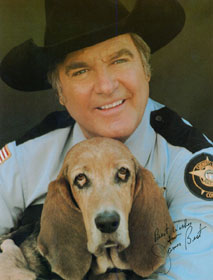
James Best of Dukes of Hazzard Dies at 88.

            http://www.cnn.com/2015/04/07/entertainment/james-best-obit-dukes-hazzard-feat/index.html

“All units! I’m in hot pursuit of the Duke boys!” This Monday, James Best of the Dukes of Hazzard died, joining Denver Pyle who played Uncle Jesse.. Best was known for playing the role of Sheriff Roscoe on the Dukes of Hazzard, always chasing after the boys. Sheriff Roscoe was an animated character who was slow, but Best was able to give his character a “childlike enthusiasm.” Sheriff Roscoe and the Dukes were always chasing each other in car pursuits, which tended to end with Sheriff Roscoe crashing. Best was born Jewel Guy in 1926 in Powderly, Kentucky where he was orphaned and adopted by Armen and Essa Best who renamed him James Best and raised him in Indiana. Before becoming an actor, best was in the Army during World War II. Best played in many hit TV shows in the 1950s and 1960s such as Bonanza and Gunsmoke. However, his best known role is still Sheriff Roscoe P. Coltrane on the Dukes of Hazzard.

          
I chose this article because I grew up watching old TV shows like Bonanza and Leave It to Beaver and more. But I remember watching and enjoying the Dukes of Hazzard the most. I would not go as far as to say that I liked the movie remake, but I still enjoy the plot of the show. I do remember Sheriff Roscoe and Deputy Enos, who always misfired his gun, and the trouble they got into while chasing the Dukes. I’ll never forget the show and still enjoy episodes today. 

Wednesday, April 1, 2015

Building from the Wreckage


reid-guitars-transferframe2053.jpg
Detroit's buildings were built using lumber from old growth forests. Mark Wallace began taking advantage of the more than 70,000 abandoned buildings in Detroit by making guitars out of reclaimed wood that served as the infrastructure of the old buildings. Wallace says the wood has a very tight grain which provides for good sound resonance. Each guitar is different and all are handmade. Wallace has made about 24 guitars and hopes to assemble a team to create a couple hundred a year. Each guitar costs around $2,000. Wallace gets his satisfaction from creating an instrument from his own hands and knowing that it came out of the city of Detroit. I think this pretty cool.  It is a very interesting way of recycling and very innovative. Plus, it gives a new purpose to the old abandoned buildings that nobody wants and adds character to the guitars and their makers, Wallace. I look at it like Wallace is trying to rejuvenate from the ashes. Nobody wants that wood anyway, so why not make a name for yourself and a profit along the way too.
 I have an uncle who does something similar to Wallace. He goes around and collects barn wood and makes wine-racks or jewelry boxes out of it. The old wood just has so much character and it is great to restore. This type of innovation and craftsmanship is where I find a huge interest and hobby. You just feel good about yourself when you restore one man’s garbage, more specifically wood, and create masterpieces out of it.